
Empowering Our Future
"The most important thing that parents can teach their children is how to get along without them" -Frank A. Clark.
2 min read
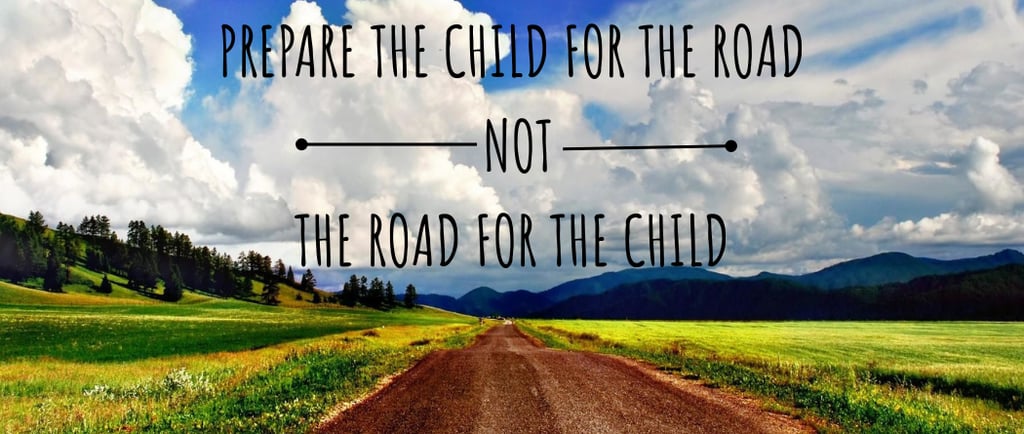
Amidst all the daily mundane meltdowns and outbursts, how and when do we start "preparing" the child for the road"?
Some of the essential skills necessary for kids to develop into capable people are:
Strong sense of personal competence – the “I am capable” feeling. This includes the ability to be good at doing something, trying one’s hand at new challenges, going through the struggle of becoming competent at a skill, making mistakes, recovering from failure as well as reaching out for help.
Feeling belonged and significant – the “I am genuinely needed” feeling and the confidence gained from contributing meaningfully to others as well as the gratitude which comes along
Inter-personal skills – the “I matter” feeling. It is the ability to form connections and relationships with others through respectful communication, cooperation and listening.
Intra-personal skills – the ability to understand one’s emotions and to be able to self-regulate and develop empathy for others
Self-management skills – when people have a variety of healthy coping and adaptive skills, they tend to have a good sense of what is/ what is not under their control
Judgmental skills – a strong sense of right and wrong and a commitment to use wisdom responsibly
Self-perception skills – an awareness of one’s strengths and weaknesses and the ability to utilize these to one’s advantage. This leads to a strong perception of their own influence on their lives.
When Parenting becomes a Verb
Like building a muscle, all these skills take time, effort and intentionality on the part of the caregiver. Rather than simply being a parent because of biology or circumstance, “parenting” emphasizes the continuous choices, behaviours, and values that shape a child’s development.
When we view parenting as an active verb, we recognize that it involves learning as much as teaching. Caregivers must respond to a child’s emotional needs, set boundaries with compassion, and model resilience in order to support development of the various skills. It is a practice that evolves with each stage of childhood, requiring patience and humility. Mistakes become opportunities for growth, not signs of failure.
Moreover, treating parenting as an action encourages shared participation. It invites communities, and extended families to contribute meaningfully, rather than placing the entire burden on two individuals. This also means that a child need not be held fully responsible/ blamed for lacking couple of skills.
Parenting as a verb also reminds us that raising a child is not a fixed role but a dynamic, daily commitment. It challenges us to engage deliberately and lovingly in shaping the next generation.
As we raise children, let’s prepare them to be happy and healthy 25-year-olds.
Reach out to parentingkarma for guidance and support tailored to your family's needs.
parentingkarma@gmail.com
© 2026. All rights reserved.
Check out: